
内容概括
银行信用评级模型多基于机构自身特征,难以纳入反映系统性风险与传染结构的金融关联。TGAR 提出基于注意力知识表示的超特征映射算子,并结合各主体之间的关联行为图,以超上下文图注意力融合资产、能力、缓冲等内在属性与主体间的风险交互,用于预测银行的评级展望。论文基于 10 年真实银行间数据进行了实验评估。
银行信用评级模型多基于机构自身特征,难以纳入反映系统性风险与传染结构的金融关联。TGAR 提出基于注意力知识表示的超特征映射算子,并结合各主体之间的关联行为图,以超上下文图注意力融合资产、能力、缓冲等内在属性与主体间的风险交互,用于预测银行的评级展望。论文基于 10 年真实银行间数据进行了实验评估。
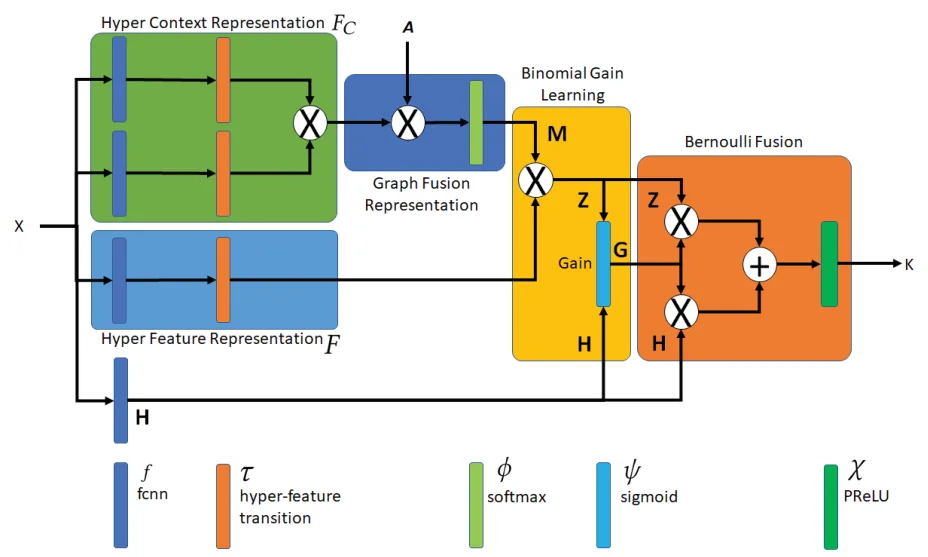
In banking finance and lending, credit rating is an important tool to measure creditor and debt reliability and prevent systemic risk among banks. Intrinsic features are key factors in risk control decisions. Decision models built with these intrinsic features are often used to assess risk classification and asset safety, but there lacks research on credit prediction for bank rating outlooks with financial correlation, which reflects the structured pattern of systemic risk and contagion. Although correlations among financial entities are valuable for rating outlook, it is hard to integrate such interactions into feature-based solutions. Aiming at the issues above, we propose a hyper-feature mapping operator based on an attention-based knowledge representation to build a knowledge system for the credit rating prediction of the interbank to represent the knowledge of credit rating. Combined with the interrelated behavior graph of each entity, a hyper context graph attention with intrinsic properties (assets, capabilities, buffers) are represented as knowledge for rating prediction to extract the context representation, helping understand the interaction of risk between intrinsic properties and entity-to-entity. Through the experimental comparison and evaluation based on 10 years of actual interbank data, the results show that the proposed model is effective with higher performance compared with the popular rating prediction methods currently used in the industry.
来源:ICIEA 2023 · 原文摘要